

An emerging movement seeking the transformation of theological practice through the application of mimetic theory. |
Past Presentations |
|| |
|| |
|| |
|| |
|| |
|| |


In Hosea God expresses anguish at contemplating the judgment of Israel. God seemed
in many cases to be a reluctant judge, a judge looking for an opportunity to
forgive, to let off the hook. Jonah was a book that challenged me to rethink God’s
willingness, even eagerness to forgive. The angry and reluctant prophet expressed
frustration that his enemies were to emerge unscathed from God’s prophetic
warning. How were these passages to be placed alongside places where God
seemed ready, even eager to judge violently? The cross of Jesus also seemed
to point to a God who looked for ways to forgive us, to remove our sin, and to
restore us rather than judge us. But the cross also troubled me. It seemed
that many theologians wanted to separate God from Jesus. Good and kind Jesus
stood between us and angry and hateful God. But this was clearly not what
the New Testament really taught. “God was in Christ,” Paul told the Corinthians,
“reconciling the world to himself.” You could not separate the Son from the
Father. For me, the old, violent atonement theories did not fit the data. When
I discovered Rene Girard’s work I was provided with a new set of lenses, a new
theory, that made sense of the confusing data and provided richly rewarding insights
on the gospel. These insights continue to emerge to my delight and
joy. They give me new hope for renewal of God’s creation through a gospel of peace
and non-violence. John Phelan |
Theology and Peace Conference, May 2009 |
We heard stimulating presentations on mimetic theory and peace related to the Bible,
spiritual theology and Christian community, and then engaged in provocative
dialogue with the speakers and in small groups. We shared prayer and worship,
meals and social time where we continued to explore our mission of transformation
of the North American Church. |
In his talk "What Sorts of Difference Does Rene Girard Make to How We Read the Bible?"
theologian James Alison suggested that mimetic theory reveals the freedom with which Jesus approached biblical
texts and invites us to do the same. Alison's talk is available at www.jamesalison.co.uk/ Andrew Marr, OSB, outlined what a spirituality rooted in imitation of God's desire for us might look like, as well as some distortions mimetic rivalry can bring to Christian spirituality in his talk "Living by the Breath of God: A Spirituality of God's Desire." The paper is available at http://www.andrewmarr.homestead.com/ Talking on "The Third Leg of Revelation: Semiotic Re-birth", Tony Bartlett looked at language and culture through the lens of mimetic theory and posed some questions about what it might mean to be church in today's world given that human culture now lives "under the sign" of Christ. Bartlett's paper is at http://www.theologyandpeace.org/Bartlett_TP09.pdf |
Evaluations of the 2009 Theology and Peace Conference included comments such as:
"profound and exciting thought from articulate speakers" "nice interactive process among committed disciples" "appreciated inclusion of silence and contemplative time" "really enjoyed the informal sharing time and meal time -- great conversation" "nice balance of intellectual and social time" "enjoyed meeting new people with similar interests and widely diverse experience" "it was profound to share in worship with Girardian friends" We hope you'll join us in 2010 and see for yourself what a Theology and Peace Conference has to offer! |
The 2009 Theology and Peace Conference brought about 65 theologians, clergy and lay
leaders from a wide variety of Christian traditions to Chicago on May 26-28.
|
 |
Theology and Peace Conference, May 2010 North Park University ROAD TO A NEW HUMANITY |

Presenter, Stephanie Perdew VanSlyke |
Stephanie's paper is available in .pdf format: Liturgy as Formation for the Practice of Peace |
Presenter, John Phelan John's paper is promised to a forthcoming book, Compassionate Eschatology, ed. Michael Hardin. In its place, John kindly gave us the synopsis below. |
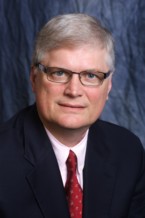
For years I had been struck by the fact that many passages in the Bible, in both
Old Testament and New, showed God going out of his way to forgive and save. God
even lets himself be talked out of the violence he seems to intend at some points! |
Reactions to the May 2010 Conference ROAD TO A NEW HUMANITY! |
Each year the Theology and Peace Conference gets better and better. 2010 was
especially enriching conference. I enjoyed conversations and fellowship
with new people and old friends. It's spiritually invigorating to be part
of an organization that seeks to change the theological landscape of American
Christianity. The presenters this year were excellent - and, like every
year, they stayed for the whole conference! That sense of community, where
the presenters are also participants, is rare in a conference setting.
I'll be sure to attend next year! Adam Ericksen |
At our 2010 conference Theology and Peace took great strides toward becoming a real
community of faith rooted in the transformative love of Christ! We were
a wonderfully diverse group in some ways - a good dozen denominations or other
church configurations were represented and we had a few who were introduced to
mimetic theory at our MT 101 session as well as those who've been "doing" mimetic
theory and theology for years. Our speakers led us into good discussions
of mimetic theory and Biblical theology, Christian liturgy, and emergent spirituality,
all things the pastors, lay leaders and theologians among us can now
build on in their own work. And all of our sessions were interwoven with
prayer, which made the Word even more alive in our words. We also had
some good conversation about the mission of Theology and Peace and what our next
steps might be as we seek to transform North American Christianity, a vision
we continue to hold to with confidence and humility. Dorothy Whiston |
What a wonderful and successful conference . It literally led us on a Road to a New
Humanity. Our speakers' presentations were stimulating and insightful.. The
worship, "pop ups", prayers, hymns, small group discussions and Bible study
that were woven through the days along with the theological reflections of our
speakers created a unity, a community and an identity around the insights
of mimetic anthropology. This experience is still resonating in me and I look
forward to our getting together again next year. Tony Cicariello |
T&P's 2010 conference in North Park, Chicago was nourishing and stimulating. The
formal talks were full of interesting insights, and the group discussions were
even better. The exegetical presentations were especially helpful to me as
a parish pastor and preacher. On top of all that, the folks who turned out for
the conference are a great bunch-- intellectually lively, creative and affable.
I would hate to have missed it, and plan to come back next year for more!
Tom Nicoll |
The first person I met at the conference was Joel who said he'd been so looking forward
to coming back again after attending Theology & Peace 2009! This is what
it's about-- building a community of faith and conversation on crucially important
human issues like "imitation" and "violence"-- because these are the tools
for a dramatically renewed theology. T&P 2010 continued the good energy
of past conferences, built on them in a substantial way, and prepared the ground
for a break-through "New Kind of Christianity" gathering 2011. Tony Bartlett |